
Click here to pre-register
100 Big Ideas
The 100 Big Ideas Competition is coming soon!
This year, the Social Impact Lab is giving away cash prizes of £100 to students with ideas that could help people or the planet.
100 Big Ideas is open to all current students of the University of Southampton, no matter your subject area or year of study. We’re looking for new and exciting ideas – ones that could transform the world, make a significant impact, or solve a problem you’re passionate about. It doesn’t need to be polished or ready to go. We just want to hear what you’re thinking.
Applications will open in November. You can pre-register your interest here to get tips on how to submit a winning application and find out more from the Social Impact Lab about future events, competitions and funding.
In the meantime, check out some of our amazing winners from last year’s competition for inspiration!
Celebrating our winners
This year’s 100 Big Ideas winners are proof of just how much social and environmental good a community of students can dream up when given the chance. Safer streets, cleaner rivers, warmer nights for people sleeping rough, mothers supported in their first hundred days, grandparents who can finally hear their alarms – each idea was a small, determined act of change, and together they’re something worth celebrating.
Here are some highlights…
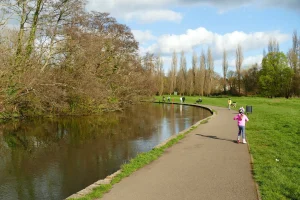
Talking River: giving a voice to the water
Angelina Spilnyk, an Electronic and Computer Science student, wanted rivers to be able to tell you how they’re doing – literally. Talking River combines environmental sensors that track river health with a personalised LLM that “speaks” as the river itself, explaining how it feels, why (pollution, sewage, and other stresses), and what people can do about it, all through live conversation with passersby.
The idea leans on a genuinely interesting insight: as our everyday vocabulary for describing nature has shrunk, so has our instinct to protect it. By giving a river a voice and a personality, Angelina hopes to rebuild that emotional connection – on the theory that people look after what feels familiar and dear to them, not just what’s scientifically important.
LumiCane: automotive safety tech for a grandfather’s safety
Dagim Fisseha Habteyesus, a medical doctor and public health researcher now studying Social Statistics and Demography, built LumiCane after seeing how often blind and visually impaired people are hurt by hazards a standard cane simply can’t detect – overhangs, moving vehicles, obstacles above knee height. His working prototype embedded lidar sensors – the same technology used in self-driving cars – into a walking cane, translating what it detects into vibration, audio, or haptic feedback tailored to the user.
The scale of the problem is sobering: in surveys, roughly half of legally blind people report head-level collisions at least once a year, and pedestrians make up around a fifth of road deaths worldwide, with the heaviest toll in lower-income countries where infrastructure lags furthest behind. LumiCane is Dagim’s attempt to bring proven automotive safety technology to the people it was never designed for.
Second Stitch: charity-shop leftovers become blankets for rough sleepers
Rueben Mardell-Kearns noticed something charity shops rarely say out loud: as more people sell clothes on Vinted instead of donating them, shops are left with less usable stock – and Cancer Research and Scope alone have had to close 156 shops between them as a result. His idea, Second Stitch, proposed buying the clothing charity shops can’t sell and reworking it into warm, insulated blankets, sold at a premium to fund donations to people sleeping rough – just as our winters become more dangerous in our ever-changing climate.
Light Up Southampton: solar streetlights that stay on
Medical student Solomon Bracey’s idea started with something personal: a close friend was mugged and beaten walking home after Southampton’s streetlights switched off at midnight to save energy. Light Up Southampton proposed solar-powered streetlights that charge by day and stay lit until 5am, giving late shift workers, hospital staff, and students walking home a safer route – without adding to the city’s electricity bill.
Chalk and Chats: a climbing group for the community
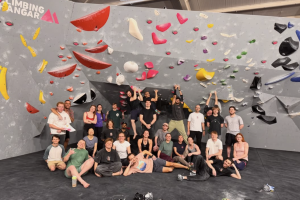
Not every big idea was a concept on paper – some were already running. Ellie MacDougall had spent her Wednesday evenings for free, volunteering at Southampton’s Climbing Hangar to run Chalk and Chats, an inclusive climbing group for anyone nervous, anxious, or simply without a climbing partner. It drew strong interest from people experiencing loneliness and emotional wellbeing struggles, and Ellie also offered one-to-one sessions for those not ready to climb in a group. Her idea was less a pitch than a proof of concept – that safe, informal community spaces can be built with nothing more than persistence and a Wednesday evening. Since winning the competition Chalk and Chats has grown to over 100 members, and has been awarded Social Impact Funding to help further this incredible community initiative!
Fundy.Asia: turning everyday cashback into charity
Some ideas arrived with the numbers already attached. Thi Huyen Mai Nguyen’s Fundy.Asia automatically converts cashback from everyday online shopping into micro-donations for nonprofits, schools, and social projects – no extra cost to the shopper. A pilot campaign had already engaged 12,000 users across 100,000 transactions in six months. Having grown up in a single-parent household where financial constraints limited opportunity, Thi Huyen Mai built Fundy to make generosity something that happens automatically, not something people have to remember to do.
Meal Mates: rescuing food and rescuing evenings
Mechanical engineering student Sutinderpal Singh spotted two problems on campus that were really one problem: cafés throwing away unsold food, and students eating alone or struggling to connect. Meal Mates, his winning idea, was an app that lists surplus food from university kitchens and local restaurants at low cost, then lets students choose to “eat with others” – matching them with fellow diners who claimed food from the same spot, and rewarding the social choice with in-app credit. It was food rescue with a side of combatting loneliness and building community.
Interview Threads: a wardrobe library for job hunters
Economics and Finance student Yash Bhuwania built their idea, Interview Threads, after watching friends skip interviews simply because they couldn’t afford smart clothing. It was a student-run library of repaired, cleaned, lent interview outfits, complete with a QR tag carrying a short, anonymised success story to boost the next borrower’s confidence, plus pop-up tailoring and styling help. Small, practical, and aimed squarely at the moment first impressions matter most.
An alarm detector, built for one grandad and now for many
Electronic Engineering student Alistair Razak’s grandfather has severe hearing loss and can’t hear frequencies above 1kHz – including his smoke and carbon monoxide alarms. Razak already had a working prototype that listens for emergency alarms, distinguishes them from everyday household sounds, and replays them at a pitch his grandfather can hear, paired with a wristwatch-style wearable that vibrates faster for emergencies and has a range of nearly a kilometre. With hearing loss affecting one in six UK adults, and four in five people over 70, it was an idea born from one relationship with the potential to protect many.
SafeSip: checking your drink without anyone noticing
Marketing student and Enactus Southampton member Josie Whitehouse’s SafeSip was a discreet, low-cost stirrer that changes pattern in the presence of common spiking drugs – designed to make drink-checking an ordinary, affordable part of a night out rather than something that draws attention or costs money. For an issue students overwhelmingly say they worry about but rarely have practical tools to address, SafeSip aimed to make safety mainstream rather than exceptional. This coming academic year, the award winning student society Enactus Southampton will be working together to bring SafeSip to life! If you’re interested in social enterprise then check them out and get involved: https://www.susu.org/groups/enactus-southampton
Projek Lumina: printing confidence, one booklet at a time
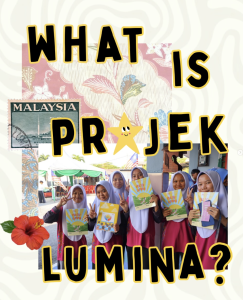
Psychology student Amirah Mardhiah Abu Bakar founded Projek Lumina through student organisation UKEC to support underprivileged secondary school students in Malaysia. It’s a one-day empowerment workshop covering critical thinking, emotional intelligence, academic planning, financial literacy, and confidence-building – anchored by an original booklet her team spent three months developing, packed with reflection prompts, tracking templates, and practical tools students can keep using long after the workshop ends.
Though she’s no longer part of UKEC, Amirah is continuing the project independently, partnering with a clinic-based community organisation in Kelantan, one of Malaysia’s more economically disadvantaged states. With just £100, she can print and distribute 50 booklets directly to students who need them – seed funding for a project she sees as a long-term commitment to reducing educational inequality. Since winning 100 Big Ideas, Amirah has continued to develop Projek Lumina and has been awarded Social Impact funding. We can’t wait to see the continued impact she has when she heads home to Malaysia this summer.
Dozens more winning ideas were just as sharp, even in a sentence:
- EmpowerWomen (EW) (Syahira Shahreen) – an online buddy scheme pairing women mentors with women who lack access to regular education.
- Cutting Through the Silence (Jonathan Williams) – trains barbers to support men’s mental health during a haircut.
- Uni-path (Luc Phillips) – accessible campus routes and quiet spaces for students with physical impairments or learning difficulties.
- Farex Rides (Ayaan Jain) – shared electric-vehicle rides between cities, cutting fares and emissions.
- NewStart Navigator (Marwa Ashfaq) – returning international students earn credit helping newcomers with UK life admin.
- Paws for Minds (Aadya Jagtap) – a student-shelter partnership swapping animal care for stress relief.
- EduBridge (Maitreyi Bhatawadekar) – mentors and workshops helping young refugees navigate UK schooling.
- Your Campus Recharge Spot (Alice Robertson) – solar-powered phone charging points dotted around outdoor campus spaces.
- MenoPower (Sophie Bidwell) – fitness and nutrition coaching for menopausal and postmenopausal women.
- GenConnect Tech Tutors (Robert Yuto Milner) – students run digital-skills helpdesks for isolated seniors.
- The Pink Bow Project (Sejal Mehra) – open mics and storytelling nights amplifying women’s voices.
- The Community Care Connector (Onyedikachi Ikenna Onwurah) – a hyper-local network tackling loneliness and medication safety in older adults.
- Re-Look Studio (XiaoQi Xu) – upcycles unwanted garments and offers AI-assisted wardrobe makeovers.
- Empowering Economics (Ben Lambe) – an app that rewards people for hitting their own savings goals.
- TrueNorth (Mark Dunkley) – a gamified community platform helping young adults find purpose and direction.
- Oceanist (Zeynep Nevin Yetkin) – turns ocean plastic collected from polluted coastlines into student-made art and design.
- Bio-Based Plastics & Dyes (Xiaoqing An) – biodegradable, plant-based plastics and dyes for the fashion industry.
- SkillShare Sundays (Rhys Thomas) – a fortnightly community meet-up where neighbours trade skills.
- Embrace (Aastha Chhatwal) – a women-first ecosystem spanning adaptive clothing, AI styling, and wearable safety tech.
- Planet Protectors Plant (Yasin Gazi) – converts food and plastic waste into compost, biogas, and eco-bricks.
- Climate Credit Commons (Joleen Cheong) – rewards everyday sustainable behaviour with credits redeemable for real financial relief.
- Student Consultancy Hub (SCHub) (Veydant Dixit) – student teams deliver affordable marketing and HR support to local small businesses.
- SkillSwap Campus (Xiaoqian LIU) – a free, peer-to-peer network for swapping skills like music, coding, and languages.
- ReLoved (Jenna Lee) – one search bar across Depop, eBay, and Vinted for easier second-hand shopping.
- AI for Early Detection of Student Burnout (Arnav Singhal) – monitors workload and wellness signals to catch burnout before it hits.
- Refill & Reward (Wesley Ngan) – smart refill stations for everyday products, with rewards for reusing containers.
- University-SME Partnership Hub (Rohan Chauhan) – connects students with small businesses to tackle real sustainability challenges.
- UKHow App (Amna Smith) – multilingual guidance on essential services for sanctuary seekers arriving in the UK.
- Hive (Taran Pal Singh) – a single, time-based feed aggregating every society event on campus.
- The Social Impact Hub – Bodmin (Laura Smith) – teaches sixth-formers how to build social enterprises for their community.
- BITEPRO (Harish Lokesh) – a protein-and-micronutrient snack designed to tackle hidden malnutrition.
- Soton Food Loop (Yijin Wang) – smart shared fridges in halls so surplus food reaches students who need it.
- FoodLink Campus (Udichi Pathak) – a QR-based app rescuing surplus canteen food for students and local NGOs.
- The Holiday Hub (Tashifeen Ahmad) – a shared events calendar connecting international students across universities during quiet breaks.
- Postable Swab Kits (Bailey Deacon) – lets stem cell register volunteers post their swab kits instead of returning in person.
- Mindful Interface (Anusha Agarwal) – a smartwatch-linked app that shields your focus when your stress levels spike.
- Student Donation Drive (Millie Duguid) – a freshers’ week campaign introducing students to stem cell donation.
- Fortuna (Tamsin Richards) – turns fast fashion’s unsold stock into discounted, personalised clothing bundles.
- Affinity (Yutong Li) – an activity-first app that finds you a companion for a run, meal, or museum trip.
- Manufacturer Vs Consumer Cost of Food (Rosemary Clark) – shows shoppers the gap between what farmers are paid and what they pay.
- ReThread (Lavisha Batra) – upcycles dead stock and old clothes into new wearable art.
- Empowering Student Mothers in Kenyan Universities (Sabrina Cheryl Nyarotso) – flexible learning and on-campus childcare so student mothers can graduate.
- The Vertical Watershed (Plato Tsang) – turns building rooftops into rainwater-harvesting utilities for cities prone to flooding.
- Fix & Flow (Zaib Uddin) – a campus repair service and decision-support tool that makes sustainable choices the easy default.
- Make Risk a Right, Not a Privilege (Yuzhe Liu) – a reversible fund giving young people the freedom to take career risks.
- The Student-Senior Homeshare Project (Yuxiang Shang) – matches students needing cheap rent with seniors needing company.
- Quirky Soups, Silly Smoothies (Nithindree Mendis) – turns “ugly” unsellable produce into free soups and smoothies for people in need.
- Second Plate (Narinthip Setthapanpanich) – a food truck selling surplus-ingredient meals by day, and £1 meals to those in need by night.
- Gym Surfing (Yash Karlekar) – a “couch surfing” for gym buddies, local prices, and fitness support while travelling.
- Grow To Go Green (Gregory Placidi) – turns unused campus lawn into a student-run herb and flower allotment.
- UniMed 247 (Adhyan Agarwal) – a roaming, student-staffed medical vehicle offering round-the-clock care to the city.
- Second Wind Gear (Oliver Payne) – collects and refurbishes lost or unwanted watersports and fishing gear for reuse.
- AR-TREE (Khyati Kapur) – artificial “trees” that shade streets, harvest rainwater, and generate solar power in dense cities.
- Read Together Circle (Fatimah Jeharsae) – helps multilingual families build their children’s reading confidence together.
- The Gabriel Initiative (Abin Anil) – a youth-led project incubator funding education and community projects for those who need it most.
- Calm Campus (Aretino Artemi) – shows real-time crowd levels so neurodivergent students can avoid sensory overload.
- Pad Pantry (Sara Chiki) – free menstrual products and myth-busting education distributed through schools and youth groups.
- FinLitPath (Godwin Dominic) – a gamified financial literacy platform for 16-25 year-olds.
- Nebula (Nabeel Khan) – a reusable water bottle with a detachable compartment for daily medication or supplements.
- CONFIDENTIALAID (Ria Hill) – a privacy-first AI tool flagging missed red flags for clinicians.
- BrightHubs (Zoe Zhang) – neighbourhood solar cooperatives offering cheap electricity and green-skills training.
- EcoPass Southampton (Rosalind White) – free bus passes in exchange for volunteering to pick up litter.
- HydroRent (Chun Kee Tham) – rentable hydroponic farm plots, managed remotely via app, for city dwellers.
- ReFeed (Nirmal Parikh) – smart bins and a rewards app that turn campus food waste into student eco-points.
- VR Technology in Classrooms (Sandeep Chamodya Wickrama Seneviratne) – virtual field trips and science visualisations for students who can’t travel.

100 Big Ideas saw winners spanning every faculty, discipline, and students from all walks of life and backgrounds. The ideas were varied and inspiring, from lidar canes to river chatbots, from social impact in Malaysia to Southampton’s own streets. What connected them wasn’t that they were polished ideas; several were still just a page of ambition. What connected them was a habit of noticing – a grandfather who can’t hear an alarm, a river nobody’s really talking to, a charity shop losing its stock – and caring enough to imagine something better.
Taken together, these ideas are proof of just how much social and environmental good a community of students can dream up when given the chance. Safer streets, cleaner rivers, warmer nights for people sleeping rough, mothers supported in their first hundred days – each one is a small, determined act of change, and together they’re something worth celebrating.